Selecting Barrier Technologies for Aseptic Processing: A Risk-Based Decision Framework Aligned with EU GMP Annex 1
The 2022 revision of EU GMP Annex 1 requires manufacturers to ensure a high level of sterility assurance through the implementation of validated and controlled manufacturing processes prior to sterile product release. While previous versions offered a checklist of cleanroom requirements, the updated document is focused on a Quality Risk Management (QRM) and Contamination Control Strategy (CCS).
Often described as “the engine and the vehicle”, QRM provides the systematic approach for identifying, evaluating, and controlling risks, while the CCS represents a holistic and structured approach in form of documented and/or implemented through systems to manage contamination risks across the facility.
For this reason, the question for manufacturers is no longer just "Is this compliant?" but rather "How does this technology minimize risk to the patient?". This shift reflects a safety-centred, risk-based approach where process design is driven by an understanding of potential contamination.
This article will provide a strategic framework for selecting between barrier technologies based on the latest EU GMP Annex 1 expectations. The goal is to provide greater insight into improving global pharmaceutical facilities.
-
The Scope of Annex 1: Aseptic vs. Terminal Sterilization
Annex 1 is often misunderstood as being primarily relevant only to aseptic processing. In fact, the guideline applies to all sterile medicinal products, including those that undergo terminal sterilization. However, the extent and focus of its requirements differ depending on the manufacturing approach. In practice, there are two distinct methods used to produce sterile products. Understanding these approaches is essential to determine how Annex 1 requirements, particularly those related to aseptic controls, should be appropriately implemented.- Terminally Sterilized Products: The sterilization is performed after has been filled and sealed in its final container, typically using validated physical methods such as moist heat (steam sterilization) or ionizing radiation (e.g., gamma or electron beam). The selection of the sterilization method must be based on product compatibility and validated to ensure the required sterility assurance level (SAL).
- Aseptic Processing: Material and equipment are sterilized separately before being processed into final products. This method is suitable for any products that cannot withstand terminal sterilization. Specific environmental conditions must be guaranteed to minimize the risk of contamination, while keeps ensuring the quality of products. Barrier technologies such as isolators and RABS are strongly recommended to reduce contamination risks by minimizing direct operator interaction with the critical Grade A environment.
-
The Barrier Technologies for Aseptic Processing
To determine the most effective separative technologies, Annex 1 clearly mentions that the selection must be based on site risk assessments. The two barrier systems that can be selected are isolators and RABS. The internal chambers should provide and assure a separation of high-risk aseptic operation occur in grade A zone from the surrounding background environment with lower cleanliness level.Isolators
An Isolator provides a high-level containment and full physical separation. The integrity of isolators is typically verified through leak testing (e.g., pressure decay methods), while the overall system performance including airflow, pressurization, biodecontamination, environmental control and other functionalities must be comprehensively qualified and validated.-
Closed isolators
The main difference between closed and open isolators is located on the material transfer system. For closed isolators, the material, equipment, and components can be entered to the process chamber through aseptic connection (e.g. Pass Through Chamber, Rapid Transfer Port (RTP)). This configuration allows closed isolators to be located in minimum a Grade D background. -
Open isolators
In open isolators, the material ingress and egress are facilitated by continuous or semi-continuous openings, which are engineered (e.g. via continuous overpressure) to avert external contaminants. The minimum cleanroom requirement for this model is a Grade C background. This type of isolator is commonly found in the filling line system, where several isolators are joined together to facilitate continuous process. The movement of material between each isolator are meditated by mouse hole.
RABS
A RABS is an enclosed system with rigid walls and integrated gloves, separating internal and external environment. However, it does not provide a fully hermetic sealed like isolators. It makes RABS required minimum Grade B background to ensure the sterility inside the chamber. To clean and decontaminate internal surfaces, the system relies on manual performance. Where biodecontamination is performed in conjunction with the surrounding environment, procedures must ensure that all internal surfaces are effectively exposed to the disinfecting agent without compromising contamination control.
-
Closed RABS
This model is commonly applied to handle sensitive products that still need to be separated. The doors necessitate to remain closed, except under pre-defined conditions. Access to internal chamber is only allowed via glove ports. This technology comes with independent air system, where the airflow is treated and/or managed via controlled, well-defined inlet and outlet channel. -
Open RABS
If the operation does not require total separation, an open RABS may be selected. These systems offer two airflow configurations: active or passive. A passive oRABS relies on the building's HVAC, while an active oRABS features its own dedicated air system.
-
Closed isolators
-
A Risk-Based Decision Framework
When choosing between those barrier technologies, four critical factors must be addressed to justify the selection within the CCS.-
Human Intervention
The frequencies of operator interventions must be clearly defined. If frequent manual checks or interventions are necessary, an isolator is the lower-risk choice. Its high-level containment is able to significantly reduce the risk of product contamination such as from microorganisms, macro-particles, and endotoxins shed from operators and the environment. This robust separation highly ensures the sterility of the products.
Conversely, when a process involves minimal operator intervention, a RABS may be selected. However, any human intervention possesses a potential breach of the Grade A zone that must be documented and justified due to the increased risk of contaminants. Therefore, the integrity of the system is heavily reliant on operator discipline, rigorous training, and strict adherence to SOPs. -
Decontamination Methods
Annex 1 emphasizes the requirement for validated disinfection, whether manual or automated. Isolators typically include an automated, validated, and controlled bio-decontamination system, utilizing sporicidal agents, such as hydrogen peroxide in gaseous or vaporized form. The effectiveness of biodecontamination processes should be demonstrated using appropriate biological indicators and validated to achieve the required level of microbial reduction based on risk assessment. Targeting 6-log bioburden reduction is commonly done in practice for isolator biodecontamination. Chemical indicators are being used to demonstrate the exposure of biodecontaminating agent through all the product-critical surface.
While integrated bio-decontamination systems are not available for RABS, routine manual disinfection using sporicidal agents is acceptable. The agent must reach all internal surfaces to ensure total coverage. The result must be supported with robust validation and demonstration of efficacy. To maintain the aseptic integrity within the unit, a suitable environment must be provided. -
Environmental and Process Monitoring
Despite of the design and specifications, continuous environmental and process monitoring should be taken into account to examine the level of compliance of a classified cleanroom with its intended use.
The air cleanliness inside of isolators and RABS must meet Grade A requirements. For particles ≥0.5 µm, the concentration should not exceed 3,520 particles/m³ both at rest and in operation. For larger particles ≥5 µm, the limit is set at 29 particles/m³. While Grade A environments are highly controlled, it is notable that even these larger “macro” particles are monitored and limited, as their presence may pose a risk to product sterility. Furthermore, microbiological monitoring within the Grade A zone must consistently demonstrate no growth to confirm the maintenance of aseptic conditions.
Occasional detection of particles ≥5 µm may be attributed to non-contamination factors, such as electronic noise, stray light in particle counters, or coincidence loss.
However, consecutive or consistent readings even at low levels may indicate a potential contamination event and should be promptly investigated. Such trends can signal early signs of system failure, such as compromised air supply filtration, equipment malfunction, or lapses in operator practices during setup or routine operation.
Both isolators and RABS are designed to support Grade A conditions within the critical zone and may utilize integrated or external environmental monitoring systems, such as particle counters and active air samplers. The performance expectations for environmental control and monitoring within the critical zone are the same for both technologies.
However, there are important differences in their design and level of separation. Isolators provide a fully enclosed and physically separated environment, typically enabling reproducible and well-controlled biodecontamination processes. In contrast, RABS are not fully sealed systems and heavily affected by the surrounding cleanroom environment (typically Grade B) to maintain conditions. As a result, both technologies require robust environmental monitoring and procedural controls, but the overall contamination control strategy should reflect the differences in system design and associated risk of external influence.
-
Modern Technology Integration
Robotic systems are increasingly explored in aseptic manufacturing to reduce direct human intervention in critical zones, particularly for repetitive and high-precision tasks. In practice, however, robots do not replace barrier technologies such as isolators or RABS; they are typically deployed within these systems to further minimize operator interaction. While this approach can strengthen contamination control, integrating robotics into aseptic barrier systems introduces several technical and operational challenges.
For example, robotic components must be compatible with repeated biodecontamination cycles, including exposure to hydrogen peroxide, without compromising mechanical performance or reliability. In addition, the introduction of robotic systems often increases capital investment and can add complexity to equipment qualification, validation, and maintenance. Despite these challenges, robotic integration remains a rapidly developing area in aseptic processing, offering promising opportunities to further reduce human intervention when combined with well-designed barrier technologies.
-
Human Intervention
-
Summary
Table 1. Comparison of Barrier Technologies for Aseptic Processing
Feature
Isolator
Closed RABS
Open RABS
Barrier Type
Fully enclosed, quantifiable leak rate
Partial
Partial
Process Complexity
Frequent intervention, complex processes
Low intervention, simple processes
Moderate intervention, simple processes
Separation
Complete
High
Moderate
Background Room
Grade C (open) or D (closed)
Grade B
Grade B
Biodecontamination
Automated
Manual
Manual
Sterility Assurance
High through engineered controls
Operator dependent
Operator dependent
Capital Cost
High
Moderate
Moderate

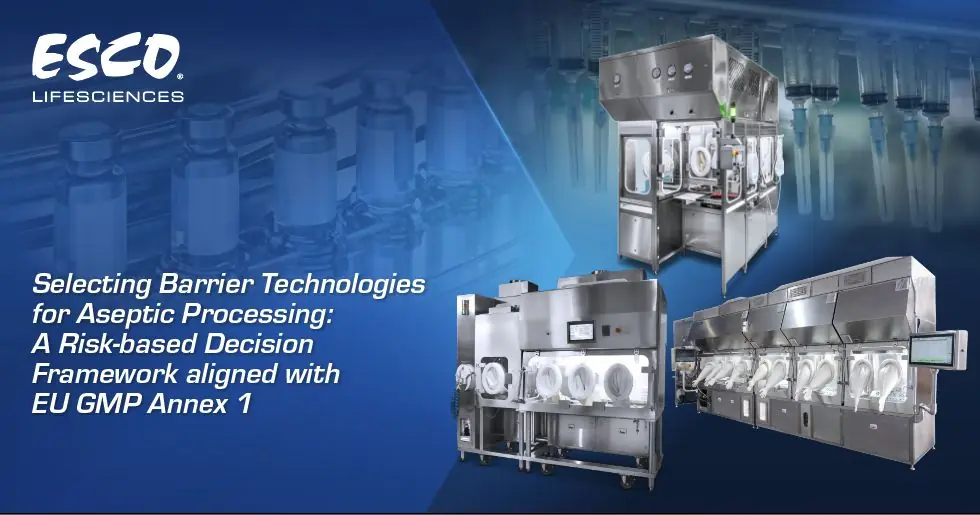
Picture 1. Esco General Processing Platform Isolator (GPPI)

Picture 2. Esco Open Restricted Access Barrier System (oRABS)
-
Conclusion
The choice between RABS and isolator technology is no longer a simple matter of capital expenditure, but a strategic decision centered on Quality Risk Management (QRM) and Contamination Control Strategy (CCS). Every facility possesses a unique risk profile; therefore, the selected technology must be capable of mitigating those specific risks. By basing this choice on a profound risk assessment, manufacturers do more than just ensure compliance with Annex 1 regulations. They guarantee the highest quality and efficacy for medicinal products, and most importantly, uphold patient safety. -
References
Global Pharmaceutical Manufacturing Leadership Forum. (2025, December). Annex 1 white paper: Strategic implementation of contamination control. International Society for Pharmaceutical Engineering (ISPE).
European Commission. (2022, August). EudraLex volume 4: EU guidelines for good manufacturing practice for medicinal products for human and veterinary use. Annex 1: Manufacture of sterile medicinal products (effective August 25, 2023).
International Organization for Standardization. (2015). Cleanrooms and associated controlled environments — Part 1: Classification of air cleanliness by particle concentration (ISO Standard No. 14644-1:2015).